Greensboro was founded in 1808 as Guilford County's seat and named for Gen. Nathanael Greene. Its museums, the sit-in site and 64 National Register listings.
Last checked Oct. 11, 2026. History is drawn from the Greensboro History Museum and NCpedia, the State Library of North Carolina’s encyclopedia; National Register listings from the National Park Service. Greensboro History Museum: 130 Summit Ave.
Places to start
- Greensboro History Museum, 130 Summit Ave.: free; 10 a.m. to 5 p.m. Tuesday to Saturday, 2 to 5 p.m. Sunday, closed Monday (museum)
- International Civil Rights Center and Museum, 134 S. Elm St.: guided tours, booked online (museum)
- Guilford Courthouse National Military Park, 2332 New Garden Road: 8:30 a.m. to 5 p.m. daily, 336-288-1776 (Park Service)
How Greensboro began
Guilford County’s first seat was Martinsville, first called Guilford Courthouse, in the northwest of the county. In 1807 the General Assembly appointed commissioners to find a central site, and Greensboro was founded in 1808 on high ground in what is now downtown, according to NCpedia. The town was named for Gen. Nathanael Greene, who led the American army at the Battle of Guilford Courthouse on March 15, 1781.
The name was first spelled Greensborough. The town stayed small for decades, a place of cabins and grand homes along dusty streets, according to the Greensboro History Museum. After 1865 it was nicknamed the City of Flowers; by the end of the century the spelling had become Greensboro.
The Gate City
In 1849 former Gov. John Motley Morehead and other Greensboro leaders persuaded the legislature to route the North Carolina Railroad through the town. The line was finished by 1856, and more railroads followed, giving Greensboro its nickname, the Gate City, according to NCpedia.
In the 1890s Moses and Ceasar Cone arrived and built textile mills; by the 1940s Cone Mills was the world’s largest denim maker. Burlington Industries moved to Greensboro in the 1930s and Blue Bell made overalls. In 1923 the city annexed enough land to grow to almost 18 square miles and more than 45,000 people, and the 17-story Jefferson Standard Building, then the tallest office building in the South, went up downtown. Insurance, led by Jefferson Standard and Pilot Life, became a major industry.
Education came early: Quakers founded New Garden Boarding School in 1837, which became Guilford College in 1888, and in 1838 Methodists won the state’s first charter for a women’s college, now Greensboro College.
The sit-ins
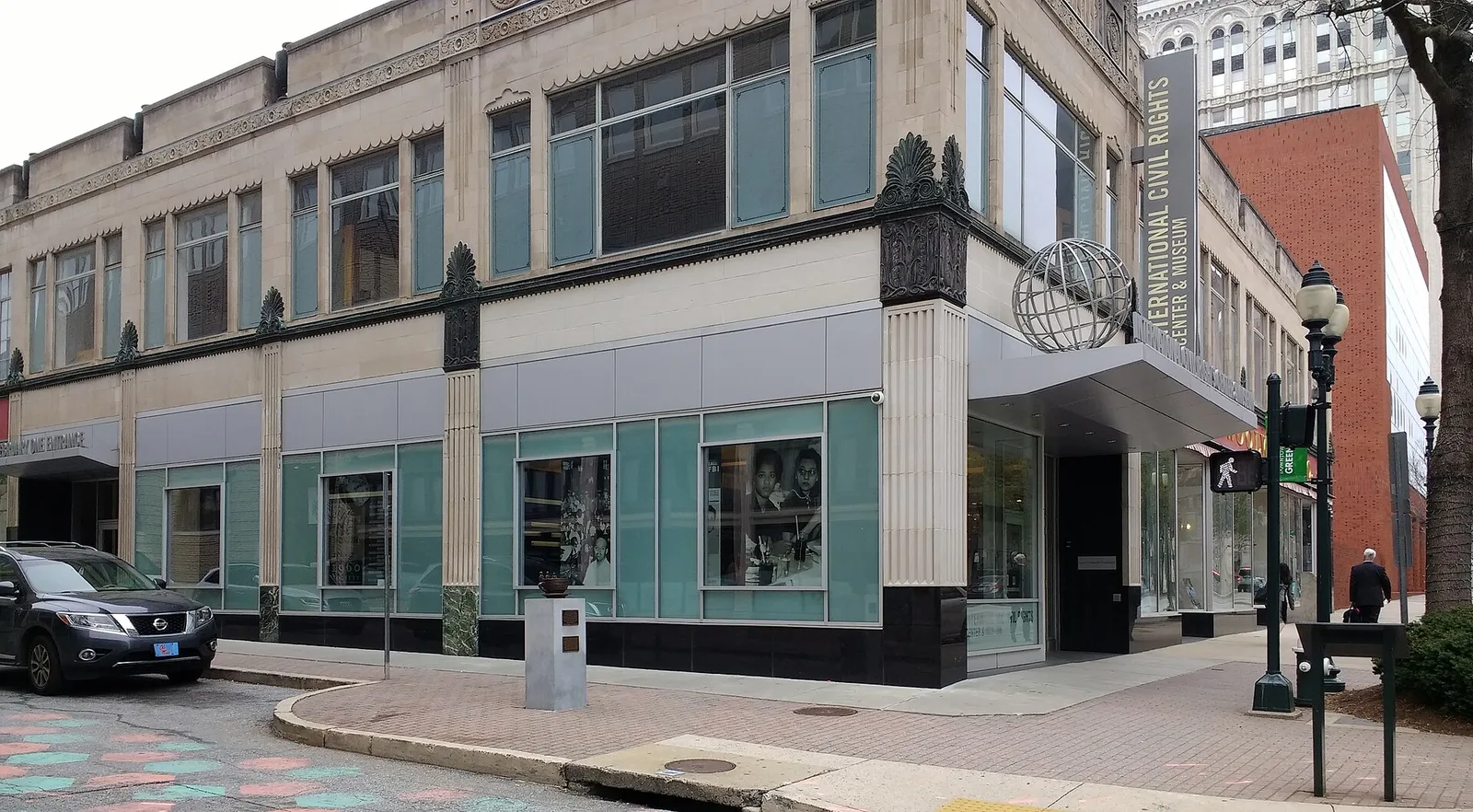
On Feb. 1, 1960, four N.C. A&T students sat down at the lunch counter of the F. W. Woolworth store downtown and ordered. They were refused service. Other students joined them, the protests spread to the Kress store on April 21, and on July 25 the Woolworth and Kress lunch counters opened to all races, according to NCpedia. The Woolworth building at 134 S. Elm St. is now the International Civil Rights Center and Museum.
Other milestones NCpedia records: Juliette Dwigins became the first woman elected to City Council in 1949, Dr. William Hampton the first African American in 1951, and Yvonne Johnson the first Black mayor in 2007. On Nov. 3, 1979, Klan and Nazi gunmen killed five people at a “Death to the Klan” march, an event remembered as the Greensboro Massacre.
Museums and historic sites
- Greensboro History Museum, 130 Summit Ave., entrance at Summit Avenue and East Lindsay Street. Free. Run by the City of Greensboro Libraries and Museum Department with the nonprofit GHM Inc. The building is itself on the National Register (1985).
- International Civil Rights Center and Museum, 134 S. Elm St., in the former Woolworth store. Individuals and groups of up to 20 book tours online; larger groups contact the tour coordinator.
- Guilford Courthouse National Military Park, 2332 New Garden Road, the 1781 battlefield, on the National Register since 1966.
- Blandwood, 447 W. Washington St., listed on the National Register in 1970.
- Union Cemetery (900 block of South Elm Street) and the Green Hill Cemetery Gatekeeper’s House (700 Battleground Ave.) are both National Register listings.
Look out downtown and across the city for North Carolina highway historical markers; one marks the site of the Guilford County Health Department, founded in 1911, the first county health department in the state.
Historic districts
Greensboro’s National Register historic districts include Downtown Greensboro (1982), the N.C. A&T campus (1988), Fisher Park (1992), College Hill (1993), Summit Avenue (1993), Irving Park (1995), Sunset Hills (2013) and South Benbow Road (2024). Three neighborhoods, College Hill, Dunleath and Fisher Park, are also local historic districts, where exterior changes need city approval; see building permits and zoning.
Every National Register listing in Greensboro
The 64 Greensboro properties and districts in National Park Service National Register records, with the year each was listed. Boundary changes to existing districts are not counted separately. Addresses are given where the Park Service records one for a single building.
| Listed | Property | Address |
|---|---|---|
| 1966 | Guilford Courthouse National Military Park | 2332 New Garden Road |
| 1970 | Blandwood Mansion and Gardens | 447 W. Washington St. |
| 1973 | Founders Hall (Guilford College) | |
| 1976 | Jefferson Standard Building | Elm and Market streets |
| 1977 | Bumpas-Troy House | 114 S. Mendenhall St. |
| 1978 | Michael Sherwood House | 426 W. Friendly Ave. |
| 1979 | Charles H. Ireland House | 602 W. Friendly Ave. |
| 1979 | Green Hill Cemetery Gatekeeper’s House | 700 Battleground Ave. |
| 1979 | Guilford County Courthouse | Market St. |
| 1979 | Wafco Mills | 801 McGee St. |
| 1980 | Central Fire Station | 318 N. Greene St. |
| 1980 | Hillside | 301 Fisher Park Circle |
| 1980 | Julius I. Foust Building | 1000 W. Spring Garden St. |
| 1982 | David Caldwell Log College Site | |
| 1982 | Dixon-Leftwich-Murphy House | 507 Church St. |
| 1982 | Downtown Greensboro Historic District | |
| 1982 | Latham-Baker House | 412 Fisher Park Circle |
| 1983 | John Marion Galloway House | 1007 N. Elm St. |
| 1984 | Dr. David P. Weir House | 223 N. Edgeworth St. |
| 1984 | Revolution Cotton Mills | |
| 1984 | Thomas Scott House | |
| 1985 | Greensboro Historical Museum | 130 Summit Ave. |
| 1985 | Harden Thomas Martin House | 204 N. Mendenhall St. |
| 1985 | West Market Street United Methodist Church | 302 W. Market St. |
| 1985 | William Fields House | 447 Arlington St. |
| 1988 | Agricultural and Technical College of North Carolina Historic District | |
| 1988 | Hoskins House Historic District | |
| 1990 | Guilford College | |
| 1991 | Kimrey-Haworth House | 5307 W. Friendly Ave. |
| 1991 | South Greensboro Historic District | |
| 1992 | Bennett College | |
| 1992 | Charles D. McIver School | 617 W. Lee St. |
| 1992 | Edward J. Forney House | 1402 Spring Garden St. |
| 1992 | Fisher Park Historic District | |
| 1992 | Former East White Oak School | 1801 Tenth St. |
| 1992 | Former L. Richardson Memorial Hospital | 603 S. Benbow Road |
| 1992 | Lyndon Street Townhouses | 195-201 Lyndon St. |
| 1992 | White Oak New Town Historic District | |
| 1993 | College Hill Historic District | |
| 1993 | Sigmund Sternberger House | 712 Summit Ave. |
| 1993 | Summit Avenue Historic District | |
| 1993 | Union Cemetery | 900 block of S. Elm St. |
| 1994 | Kellenberger Estate | |
| 1995 | Former Pomona High School | 221 Spring Garden St. |
| 1995 | Irving Park Historic District | |
| 1995 | Tabernacle Methodist Protestant Church and Cemetery | |
| 2001 | World War Memorial Stadium | 510 Yanceyville St. |
| 2002 | Buffalo Presbyterian Church and Cemetery | 800 and 803 Sixteenth St. |
| 2003 | James B. Dudley High School | 1200 Lincoln St. |
| 2005 | Greensboro Senior High School (Grimsley High School) | |
| 2008 | Wilbur and Martha Carter House | 1012 Country Club Drive |
| 2011 | Mock, Judson, Voehringer Company Hosiery Mill | 2610 Oakland Ave. |
| 2013 | Sunset Hills Historic District | |
| 2014 | Carolina Cadillac Company Building | 304 E. Market St. |
| 2014 | Proximity Print Works | 1700 Fairview St. |
| 2014 | U.S. Post Office and Courthouse (L. Richardson Preyer Federal Building) | 324 W. Market St. |
| 2015 | James H. and Anne B. Willis House | 707 Blair St. |
| 2020 | Blue Bell Company Plant | 620 S. Elm St. |
| 2022 | Pilot Life Insurance Company Home Office | 5300 High Point Road |
| 2024 | Edward and Frances S. Loewenstein House | 2104 Granville Road |
| 2024 | F. W. Woolworth Company Building | 134 S. Elm St. |
| 2024 | South Benbow Road Historic District | |
| 2024 | Tanlea Woods | |
| 2026 | Magnolia Hotel |
Related: parks and trails, population and growth and things to do this month.
Frequently asked questions
When was Greensboro founded?
In 1808, as the new seat of Guilford County, in the center of the county. It was named for Gen. Nathanael Greene, who led American forces at the Battle of Guilford Courthouse in 1781.
What happened at the Greensboro Woolworth’s?
On Feb. 1, 1960, four N.C. A&T students sat at the whites-only lunch counter of the F. W. Woolworth store downtown and were refused service. The sit-ins spread, and the Woolworth and Kress counters opened to all on July 25, 1960.
Is the Greensboro History Museum free?
Yes. The museum at 130 Summit Ave. is free and open 10 a.m. to 5 p.m. Tuesday to Saturday and 2 to 5 p.m. Sunday; it is closed Mondays.
How many National Register of Historic Places listings does Greensboro have?
Our count from National Park Service records is 64 listings in Greensboro, from Blandwood in 1970 to the Magnolia Hotel in 2026.
Have your say